A Guide to Moles and When to Get Your Skin Checked
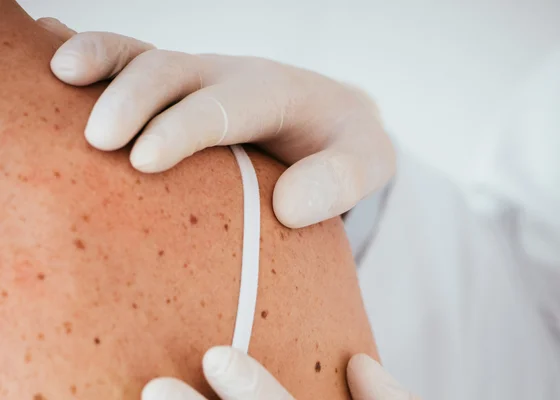
Is that a new mole or has that spot changed? It could be a darker spot on your shoulder or a mole on your back that your partner thinks doesn’t look right.
Sun exposure is part of everyday life and small changes can be easy to dismiss when life is busy, but in Australia a professional skin check is not a luxury; it is a necessity. When skin checks have a place in your regular health care, it is more likely to be detected earlier, and the earlier, the better.
SkinDoc in Liverpool provides professional skin checks for people across South Western Sydney, to assess skin changes, moles, sun damage and skin cancer concerns.
Learn what to look out for during self-checks and take a proactive role in your skin health by contacting the SkinDoc team to book your appointment today.
How to self-check your skin
Checking your own skin is useful because you know, or learn, what is normal for you. A self-check can help you notice changes like new spots, changing moles or marks that feel different between professional appointments.
In good lighting, look across your whole body, including your face, ears, neck, chest, arms, hands, legs and feet. Do not forget areas that are easy to miss too, such as your scalp, back, between the toes, soles of the feet and under your nails!
Tip: A mirror, phone camera or help from a partner can make hard-to-see areas easier to check. Plus, taking photos of a mole or spot can also help you notice if it changes over time.
If a mole or mark worries you, it is better to have it reviewed than to keep watching it with uncertainty.
What to look for
The main thing to notice is change or difference. A mole or spot that has looked the same for years may be less concerning than one that starts changing in size, colour, shape or feel.
Book a professional skin check if you notice a:
- New mole, freckle or spot
- Mole that changes size, shape or colour
- Spot that becomes raised, firm or tender
- Sore that does not heal
- Mark that bleeds, crusts or keeps returning
- Spot that itches, tingles or feels different
- Mole that looks unlike the rest of your moles
The ABCDE and EFG signs can also help guide you further in what to look out for at home.
The ABCDE signs
The ABCDE guide can help you look for changes that may warrant a skin clinic visit.
One half of the mole or spot does not match the other.
The edge looks uneven, blurred, notched or ragged.
More than one colour is visible, such as brown, black, red, white, blue or grey.
The spot is getting bigger.
Changes in size, shape, colour, height, texture, bleeding, crusting, itching or tenderness.
The EFG signs
The EFG guide is used for nodular melanoma, that may look different to other signs.
It is raised above the skin.
The spot feels hard or firm to touch.
The spot is growing larger in a matter of weeks or months.
We encourage you to book a professional skin check if you notice a new or changing mole, freckle or spot or it matches any of the ABCDE or EFG signs.
When to book your skin check
You do not need to wait until you feel something is wrong and regular skin professional skin checks are essential. It could be for practical reasons too, like spotting a mole that looks darker in a photo, a spot catching on clothing and a partner noticing something on your back that you can’t see.
Regular skin checks are also recommended if you have:
- A personal history of skin cancer
- Family history of melanoma
- A large number of moles
- Fair or freckled skin
- A history of sunburn
- Used solariums in the past
- Outdoor work, sport or regular sun exposure
- A weakened immune system or condition
Why we need professional skin checks
A professional skin check matters even if you are meticulously checking your skin at home. At a clinic appointment, such as at SkinDoc, the skin is reviewed by a medical professional with a trained eye and specialised tools.
One of these specialised tools is a dermatoscope, a handheld device with a powerful light and magnifying lens, helping us see into deep layers of the skin to view patterns, colours and structures that cannot be seen clearly with the naked eye. With a more accurate picture, we can better decide if a spot needs to be monitored, reviewed by a specialist, sampled for pathology or treated.
A professional assessment should also leave you informed on how frequently your skin should be checked based on your skin history and risk factors.
Early detection can save lives
Skin cancer can look different from person to person; as a changing mole, a new raised spot, a sore that does not heal, a scaly patch or a recurring mark that bleeds.
However it presents itself, early detection matters because skin cancer is easier to treat before it grows deeper, spreads or affects a larger area of skin.
In non-melanoma skin cancers, earlier review can mean a smaller treatment area and less complex care. For melanoma, timing is even more important as it has a higher risk of spreading if it is not found and treated early.
These skin concerns may turn out to be harmless, but having them assessed early can give you more options, reduce the chance of needing more involved treatment and improve the chance of successful treatment.
Skin checks are not about looking for something to worry about, but they can save lives. If a skin cancer is identified and treated early, there are better chances of avoiding surgery, disfigurement or even death caused from skin cancer.
Skin checks at SkinDoc
SkinDoc is a dermatologist-led practice in Liverpool CBD that provides professional skin checks for patients in Liverpool our surrounding communities in Bankstown, Fairfield, Campbelltown, Narellan and greater South Western Sydney.
During your skin check, you may be asked about your skin history, past sun exposure, family history, previous skin cancers and recent changes you have noticed.
Your skin will be examined from your head to your toes, with extra attention given to any areas that you flag with us to review. After a trained eye, we will use a dermatoscope to assess moles and spots in more detail. If any further testing or review is needed, our clinician will take the time to walk you through the next steps to support you in making informed decisions about your skin health.
Book your skin check
If you have noticed a new or changing mole, or it has been a long time since your last skin exam, contact SkinDoc in Liverpool to book your professional skin check. Our team can guide you through what to expect, any appointment fees and Medicare rebates when booking.
Call SkinDoc on (02) 9602 5785, email info@skindoc.com.au or use the online enquiry form.
References
Cancer Institute NSW. (2023). Detect skin cancer early. https://www.cancer.nsw.gov.au/prevention-and-screening/preventing-cancer/preventing-skin-cancer/reduce-your-skin-cancer-risk/detect-skin-cancer-early
Cancer Council Australia. (n.d.). Check for signs of skin cancer. https://www.cancer.org.au/cancer-information/causes-and-prevention/sun-safety/check-for-signs-of-skin-cancer
Cancer Council Australia. (2026). Melanoma. https://www.cancer.org.au/types-of-cancer/melanoma
Healthdirect Australia. (2025). Skin cancer and melanoma. https://www.healthdirect.gov.au/skin-cancer-and-melanomas
Healthdirect Australia. (2025). Should I be checked for skin cancer? https://www.healthdirect.gov.au/should-I-be-checked-for-skin-cancer
Disclaimer
This article is for general information and educational purposes only. It is not a substitute for professional medical advice, diagnosis or treatment. All medical procedures and treatments carry risk and results vary. Consult with Dr Yip, MED0001134094, or the SkinDoc team for advice based on your individual skin concerns.
Referral and next steps
A GP referral is often required for dermatology consultations, depending on your condition and Medicare eligibility. SkinDoc works closely with referring GPs so information can be shared and care can continue in a coordinated way.
To discuss scar treatment options, you can book a consultation at SkinDoc in Liverpool or speak with your GP about a referral to SkinDoc Dermatology.
*This article is for general information and educational purposes only. It is not a substitute for professional medical advice, diagnosis or treatment. All medical procedures carry risk and results may vary. Consult with Dr Yip (MED0001134094) for tailored advice and treatment planning.